




Wae Rebo, The Village That Touches the Sky
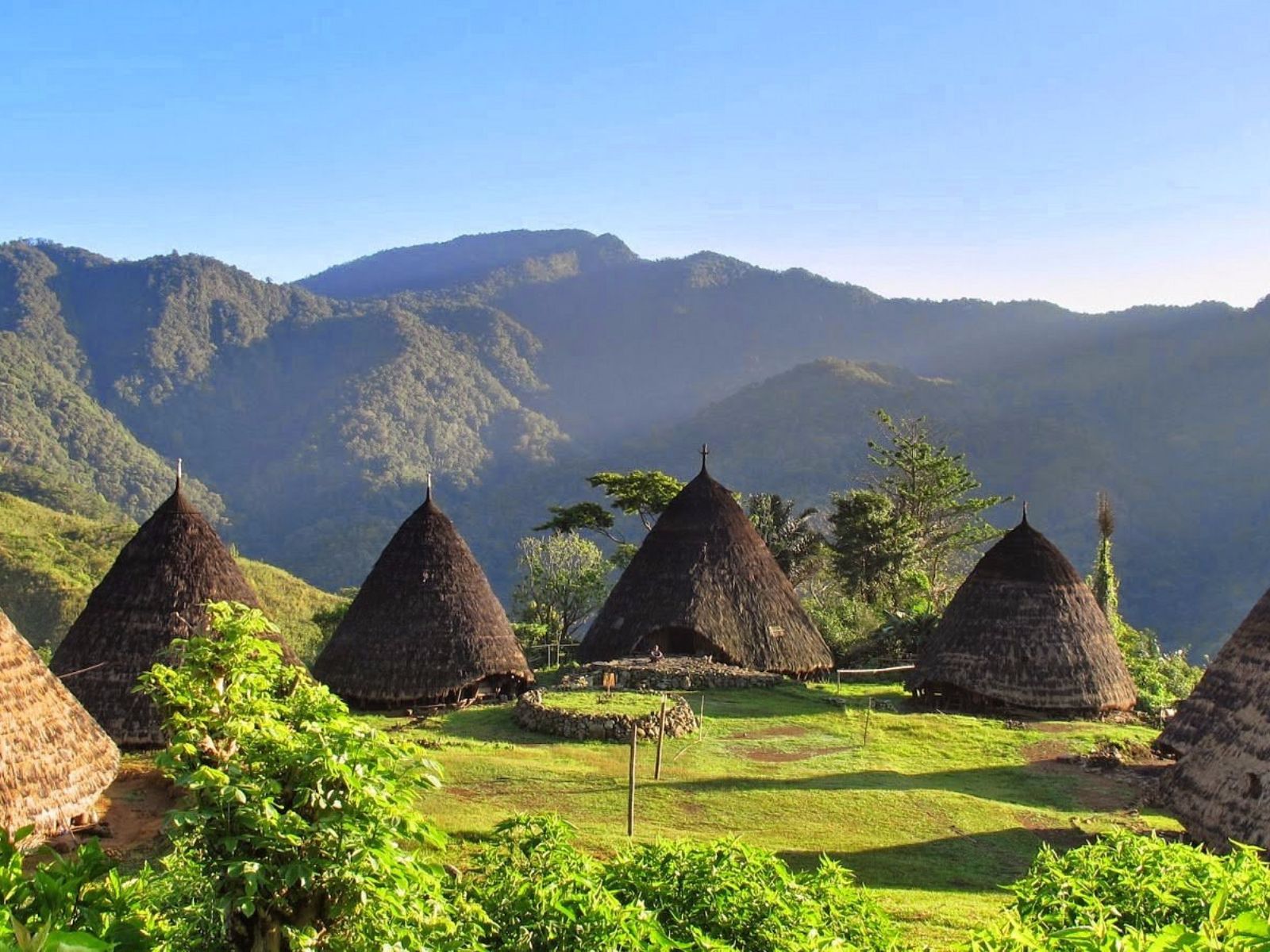
Perched high in the misty highlands of Flores, Wae Rebo feels like a village cradled between earth and sky.
It’s been called one of the most beautiful villages in the world, officially crowned the second most beautiful village globally (2024) by The Spectator Index, right after Rothenburg ob der Tauber in Germany, and it’s easy to see why.
But the real beauty of Wae Rebo isn’t in the view, it’s in the soul of its people.
A Village in the Clouds, Rooted in Time
Home to the Manggarai people for centuries, Wae Rebo sits 1,100 meters above sea level, hidden behind lush forests and winding mountain paths.
The journey to get there takes hours on foot, but every step feels like traveling backward in time.
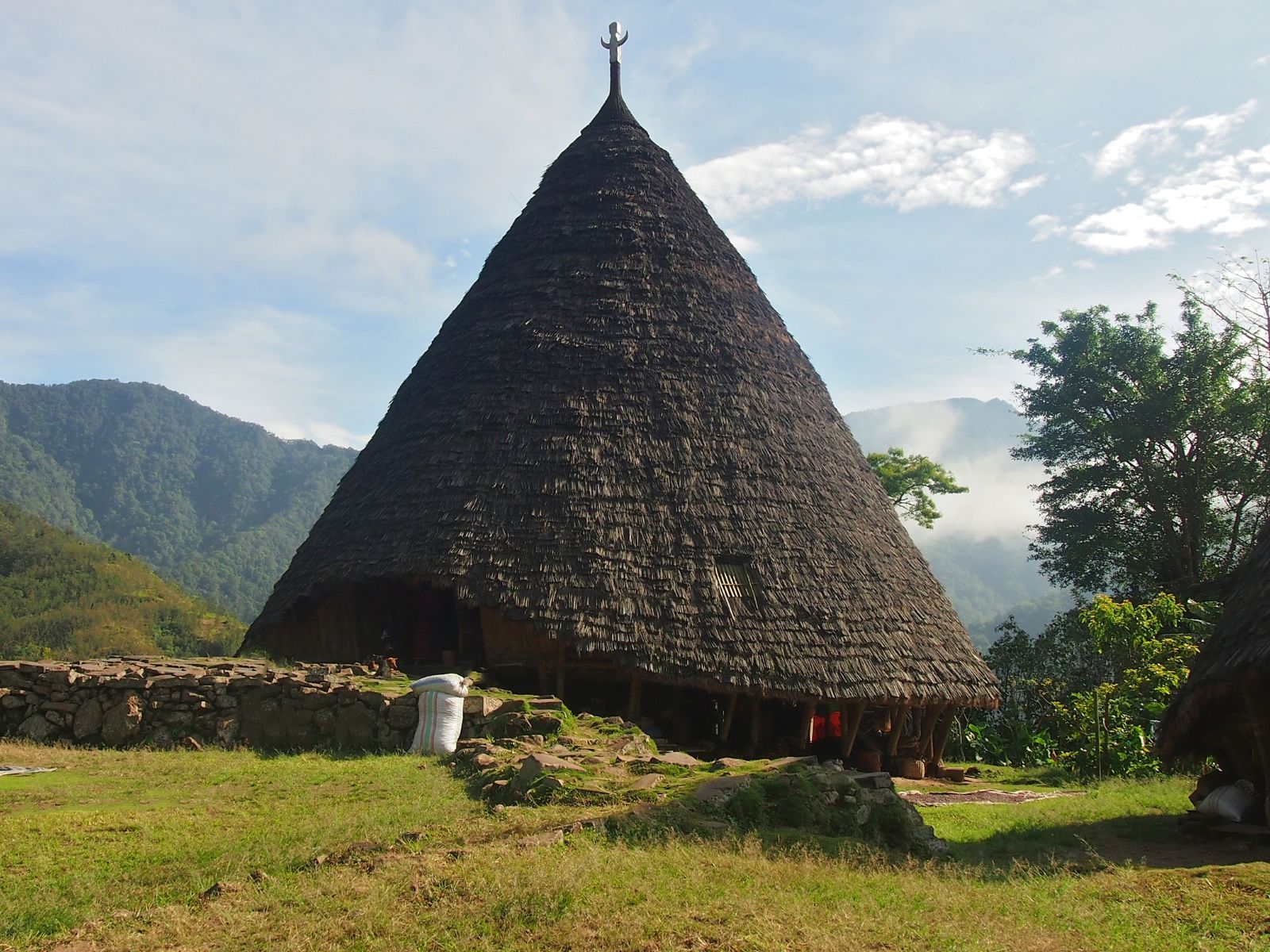
At the heart of the village stand seven towering conical houses known as Mbaru Niang. Built entirely from bamboo, wood, and palm fibers, these houses are architectural poetry, their circular layout symbolizes unity, while the pointed roofs reach upward like prayers to the ancestors.
Each Mbaru Niang holds multiple generations under one roof, reflecting the Manggarai philosophy of living in harmony, not only with family, but with nature and spirit.
The central house, Mbaru Gendang, serves as the soul of the village, a sacred space where the elders gather to discuss community matters and perform rituals passed down for over 18 generations.
Read our article's:
- Discovering Prambanan Temple: A Marvel of Ancient Architecture and Indonesian Cultural Heritage
- Baluran National Park: The Mesmerizing Africa of Java in Situbondo, East Java
- Padang Shines as a Top Travel Destination in New Horizons 2025 Report
Living Heritage, Recognized by the World
In 2012, UNESCO Asia-Pacific honored Wae Rebo with the Award of Excellence for Cultural Heritage Conservation, recognizing how the community rebuilt and preserved its Mbaru Niang using traditional techniques and collective spirit.
That award wasn’t just about architecture, it was about resilience, unity, and pride in identity.
The Art of Slowness and Connection
Life in Wae Rebo follows the rhythm of nature. There’s no signal, no rush, and no need for either. The villagers rise with the sun, tend their coffee plantations, and weave daily life with humility and gratitude.
Visitors are welcomed like family, offered a bed, a meal, and freshly brewed Wae Rebo coffee, earthy and aromatic, grown from the same soil they walk on.
Evenings are quiet but rich, the crackle of firewood, the sound of soft conversations in Manggarai language, and the hum of insects in the dark. There’s a peace here that doesn’t feel borrowed, but earned.
More Than a Destination
Reaching Wae Rebo means more than a hike; it’s a journey into perspective.
It teaches that progress isn’t always about speed, sometimes, it’s about depth.
And when the morning mist clears and sunlight spills across the Mbaru Niang, you’ll realize you’re not just standing in a village, you’re standing in a living story, one the world is finally beginning to hear.
“Wae Rebo isn’t just the most beautiful village you’ll see, it’s the most beautiful feeling you’ll remember.“
READ MORE
EXPLORE OTHER GUIDES & STORIES
Religious Tourism to the Tomb of Sunan Gunung Jati: Tracing the Islamic History of Cirebon
Tips Bepergian di Kota Palembang dengan LRT
Wisata-wisata Favorit di Karawang
- BATIQA HOTELS
- HOME
- ABOUT BHM
- BOOK A ROOM
- OFFERS
- MEETING
- PRESS
- CAREERS
- CONTACT US